
Experience the Golden Magic of Rajasthan — Under a canopy of stars, surrounded by ancient sand dunes
While the rhythmic sway of a camel safari offers a nostalgic glimpse into the past, the Jeep Safari has become the go-to choice for those seeking adrenaline, speed, and a deeper exploration of the Thar Desert. Jaisalmer’s vast, golden landscape is perfectly suited for rugged 4x4 vehicles, allowing travelers to cover significant distances and reach remote areas that remain inaccessible by traditional means.
The Thrill of Dune Bashing
The centerpiece of any Jeep safari in Jaisalmer is dune bashing. This high-octane activity involves navigating a powerful 4x4 Jeep—typically a Mahindra Thar or a modified open-top vehicle—across the steep, shifting slopes of the Sam Sand Dunes. Experienced local drivers maneuver the vehicles at varying speeds, climbing near-vertical dunes and descending with a controlled slide that provides a genuine roller-coaster sensation.
Unlike the gentle pace of a camel, the Jeep allows you to experience the sheer scale of the desert. The wind in your hair and the spray of golden sand create an exhilarating atmosphere that contrasts beautifully with the serene silence of the deep desert.
The Itinerary: Beyond the Dunes
A comprehensive Jeep safari often includes more than just sand-sliding. Because of the vehicle's speed, operators can curate a diverse itinerary that blends adventure with heritage:
Kuldhara Abandoned Village: Most safaris stop at Kuldhara, a 13th-century village that was abandoned overnight by the Paliwal Brahmins. Legend says it is cursed, and walking through the eerie, well-preserved stone ruins provides a hauntingly beautiful historical perspective.
Khabha Fort: Another architectural marvel, this ruined fort offers a panoramic view of the desert plains and the remains of 80 forgotten houses. It is a prime spot for photography, especially in the soft morning light.
Natural Oases: Some routes take you to local desert oases, where greenery unexpectedly sprouts from the arid ground, serving as a vital water source for local herds of sheep, goats, and camels.
Wildlife Spotting: The Thar is home to resilient wildlife. From the comfort of a Jeep, you are more likely to spot the elusive Indian Fox, Desert Cat, or the graceful Chinkara (Indian Gazelle) moving across the scrublands.
Sunset and Cultural Immersion
As evening approaches, the Jeep safari usually culminates at a high vantage point on the dunes. Watching the sunset from a 4x4 provides a different perspective; you can quickly move to find the most secluded spot away from the main tourist crowds.
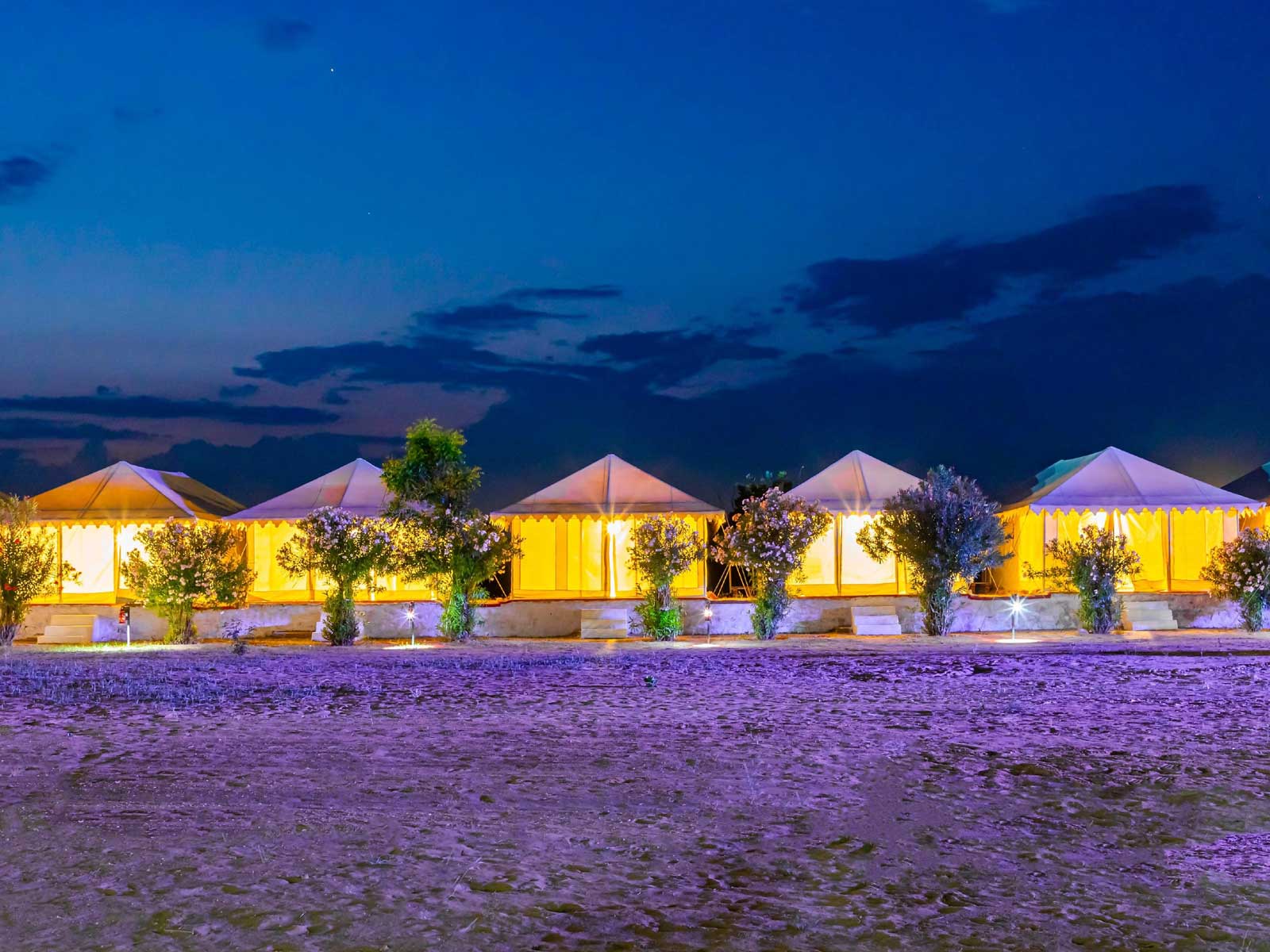
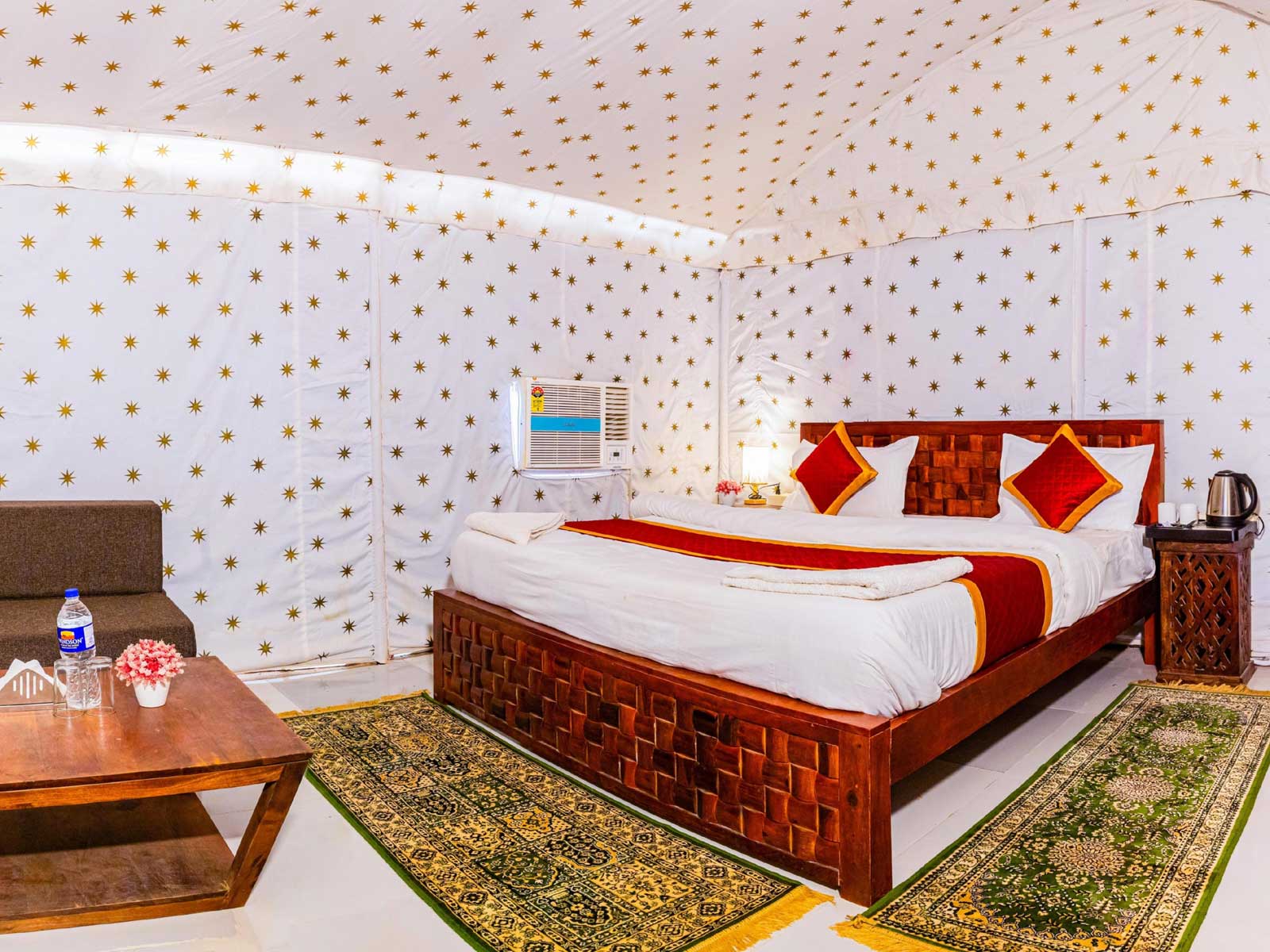
Many Jeep safari packages are integrated with desert camp experiences. After the sun dips below the horizon, travelers are driven to a traditional campsite. Here, the energy shifts from high-speed adventure to cultural warmth. You are greeted with a traditional "Teeka" ceremony, followed by folk music performances (Langa and Manganiyar musicians) and the mesmerizing Kalbelia dance. The night usually ends with a lavish Rajasthani buffet around a roaring bonfire.
Practical Information for Your Trip
Best Time to Go: The most comfortable time for a Jeep safari is during the winter months, from October to March. Morning safaris (starting around 6:00 AM) are perfect for photography and wildlife, while afternoon safaris (starting around 3:30 PM) are best for those wanting to experience the sunset and evening festivities.
What to Carry: The desert sun is intense, so high-SPF sunscreen, polarized sunglasses, and a scarf to protect your face from dust are essential.
Safety First: Always ensure your driver is licensed and the vehicle is in good condition. While dune bashing is meant to be fast, it should always feel controlled.